A Device Suddenly Disconnected from the Network — The Reality of 3G Service Shutdown
2026-04-18
3G services in Japan have been fully shut down. IoT devices that support only 3G can no longer communicate. This article breaks down why connectivity fails using the connection flow (Scan, RRC, NAS) and explains structurally where the failure occurs.
Introduction
When connecting IoT devices to cellular networks, it is easy to design systems under the assumption that “the network will always be there.” However, that assumption can suddenly collapse one day. In this article, we will examine what actually happens when 3G is shut down, and what needs to be considered to maintain service continuity.
Conclusion (First)
- 3G services in Japan have already been completely shut down
- Devices that do not support LTE / 4G or later will be disconnected from the network
- Shutdown timing is determined by telecom operators and cannot be controlled
- It is essential to understand the situation in each service region and plan migration in advance
👉 The key point is
Cellular networks are not guaranteed to be available indefinitely — systems must be designed with this assumption
1. 3G Has Disappeared from Japan
3G services in Japan began with NTT Docomo’s FOMA in 2001, followed by other operators. With the widespread adoption of 4G and 5G, shutdowns have progressed step by step since 2022. With the termination of NTT Docomo’s 3G service at the end of last month (March 31, 2026), 3G service, which had continued for approximately 25 years, disappeared from Japan.
| Operator | Start | End |
| KDDI |
Around 2002 CDMA2000 |
March 2022 |
| SoftBank |
December 2002 W-CDMA *At the time: Vodafone / J-PHONE |
April 2024 |
| NTT Docomo |
October 2001 FOMA (W-CDMA) *World’s first commercial 3G service |
March 2026 |
The purpose and reason for the shutdown are extremely simple:
👉 To reuse limited spectrum (band) for more efficient technologies such as LTE / 5G
The important points here are:
- Shutdown is a technical inevitability
- Shutdown timing is determined by operator business decisions
In other words, 👉 users and service providers cannot control it This is something that needs to be recognized.
2. What Happens to Devices That Cannot Migrate to LTE
The conclusion is simple.
👉 They are completely disconnected from the network
In my own experience, the following occurred after the 3G shutdown.
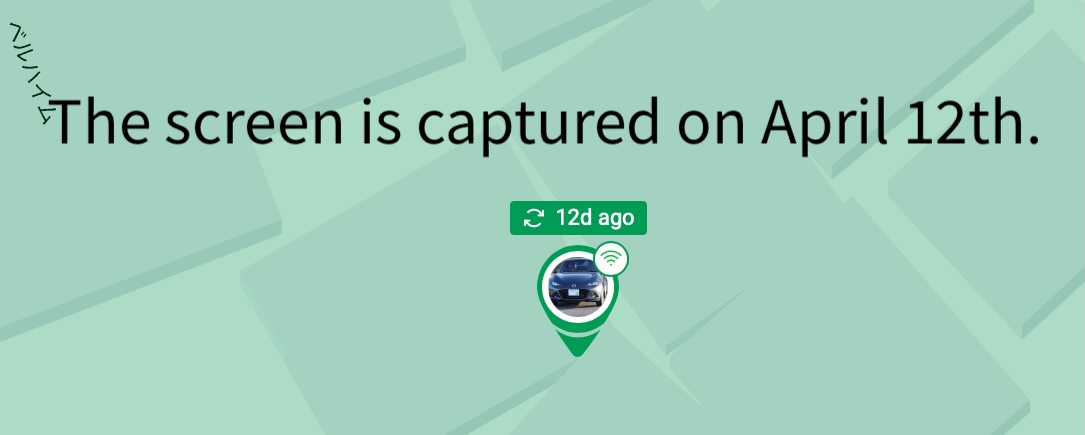
- The location information of a remote GPS device stopped updating
- Communication stopped as of April 1
- The screen above was captured 12 days later, on April 12, and shows that location information had not been updated for 12 days
This is not a matter of “communication quality getting worse”:
👉 Attach itself is no longer possible (= the device cannot enter the network)
The same impact was seen in consumer services.
For example, the tobacco vending machine service “TASPO” was also discontinued due to the shutdown of NTT Docomo’s 3G network.
This is a typical example showing that systems dependent on 3G cannot continue as they are.
👉 TASPO to End at Month-End Due to Docomo 3G Network Shutdown (Asahi Shimbun), March 31, 2026
The important point here is:
- It does not gradually degrade
- It completely stops on a certain day (the operator’s shutdown date)
3. How to Think About Migration
Whether migration is possible is basically determined by the following.
① Communication Technologies Supported by the Modem
- LTE supported → migration possible
- 3G only → physically impossible
In other words,
👉 It is almost entirely determined by the hardware
This is the reality.
② Devices Are Not at Hand
This is the difficult part in IoT.
- Devices are deployed in the field
- Retrieval or replacement is not easy
Therefore, what becomes important is:
👉 Remote control and switching mechanisms
③ eUICC (eSIM) as an Option
By using eUICC:
- Profiles can be rewritten remotely
- Telecom operators can be switched
However,
👉 If the modem does not support LTE, replacing the profile will not solve the problem
This point requires attention.
④ What Is SGP.32?
SGP.32 is:
- A remote provisioning specification for IoT eSIM
However, its essence is:
👉 It is one method for remotely changing the connectivity destination
and
👉 It is not, by itself, the solution to the problem
This point needs to be separated calmly.
I plan to cover SGP.32 together with SGP.02 and SGP.22 in a separate article.
4. What to Consider in Practice
Finally, let’s organize the practical points that matter in design and operations.
① Assume a Device Lifecycle
- Communication technologies always go through generational change
- Devices designed to be used for 10 years require particular attention
👉 Network lifetime ≠ Device lifetime
② Design on the Assumption That Devices Are “Not at Hand”
- They cannot be replaced easily
- On-site work is costly
Therefore:
- Can settings be changed OTA (Over The Air)?
- Is there room left for configuration changes?
These points become important.
③ Do What Can Be Done in Advance
After shutdown, it is too late.
- Inventory target devices
- Confirm communication technologies (3G / LTE / LTE-M / NB-IoT)
- Understand shutdown status by service region
👉 Make decisions “while devices are still working”
④ Design with Insurance in Mind
- Multi-RAT support (LTE / LTE-M / NB-IoT)
- Multi-carrier support
- eSIM support
Not all of these are always required, but:
👉 The important thing is to design so that you do not end up in a dead end
Summary
3G shutdown is not just a technology update:
👉 It is a real risk where a service can “suddenly stop”
What matters is:
- Shutdown will happen
- Timing cannot be controlled
- It cannot be handled after the fact
Therefore:
👉 Design on the assumption that “networks change”
This is the premise for keeping IoT services running over the long term.
Appendix: Why It Becomes “Unusable” (Where It Fails)
Even after a 3G shutdown, “cannot communicate” does not have only one cause.
What matters is:
👉 Identifying at which stage in the connection flow the failure occurs
■ Overall Connection Flow (Recap)
[Power ON]
   ↓
[Scan]
(Search for radio signals matching the configured Band / RAT)
   ↓
[Cell Detection]
(Find candidate cells)
   ↓
[RRC Connection Establishment]
(Establish the radio connection)
   ↓
[NAS Attach]
(Authentication and subscriber verification)
   ↓
[Data Communication Starts]
| Pattern | Condition | Where It Fails in the Flow |
How It Looks |
| ① No signal |
The device supports only up to 3G Due to the complete 3G shutdown, the device cannot receive radio signals from a generation it supports |
Scan | Nothing is visible |
| ② Cannot connect |
The device supports only LTE-M The base station supports only LTE The device can receive 4G radio signals, but cannot connect using a supported RAT |
RRC | Visible but cannot connect |
| ③ Rejected |
The device has an LTE modem and contains a SIM from Carrier A There is no roaming contract or permission Carrier A has already shut down LTE Carrier B continues to provide LTE service, and the device receives Carrier B’s LTE signal Even if the device attempts connection and authentication with Carrier B, it is rejected The SIM profile is corrupted and cannot be used The contract has expired |
NAS | Briefly connects, then disconnects |
| ④ No data communi cation |
This is not a shutdown or service termination case, but a state where a communication failure has occurred, such as the P-GW being unavailable | Data plane | Connected but unusable |
- Scan
- Cell detection
- RRC connection establishment
are explained in detail in:
“How Devices Discover Cellular Networks”
- NAS Attach
is explained in detail in:
“Why Initial Roaming Connection Takes Time?”
- Data communication start
is explained in detail in: